Val, how and when did you get in touch with Metal music? Which bands were your faves? Which bands did have an effect on you?
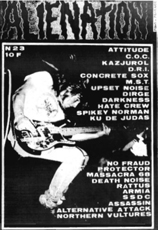
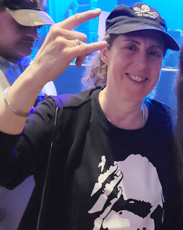 “I lived in Le Havre between 1981 and 1991 and discovered Metal in 1985. From 1981 (the year I first heard the power of MOTÖRHEAD), I became more involved with my friend Pat in the Hardcore Punk scene. We even published a fanzine about it from 1981 to 1988 (we regularly took the ferry to London, where the scene was particularly intense). One day in 1987, we met a local band from Le Havre, NOMED, and that was our first contact with the Metal scene. The members of NOMED and we were all excited to explore each other’s musical cultures. My favorite bands were SLAYER, MASTER, NAPALM DEATH, CARCASS, TERRORIZER… to name the main ones. This new scene brought a new energy and was closer to the energy of the Thrashcore / Crossover scene that existed with bands like SIEGE, D.R.I., SUICIDAL TENDENCIES, SEPTIC DEATH, HERESY…”
Did your parents support your goals, your hobby? Was listening to Metal music a kind of hobby (joy) for you?
“No, my parents never supported my musical choices. Listening to this music was much more than just a pastime. When I started making a fanzine with Pat, there was very little information about this scene in France. Our goal was to promote it and inform our readers about new bands, releases, concerts and scene news in many countries, with the help of others wherever possible. I believe you can’t afford to regret the lack of information if you don’t do anything about it. I learned this from the strength of the DIY movement I saw in London. I was impressed!”
Before you established Thrash Records, did you have any experiences as far as the music industry, money, financial things etc.?
“No, no experience in the music industry! Our experience was limited to a fanzine for over five years and organizing concerts. But this experience stemmed from our desire to promote the music we loved and make it known. We were more activists than professionals. When you want something, it’s possible if you believe in it and work for it. That’s why we created Thrash. Originally, our goal was to distribute this music, always with the aim of promoting it. Pat, who had lost his job, had set everything up himself in the space that served as our shop and office for mail order.”
 Your parent label was Infest Records, wasn’t it?
“No, originally, we launched Thrash Records in January 1987 for mail order, which accounted for 95% of our business. After three years and numerous postal strikes, the situation became very difficult. So we decided to create a label under the same name, Thrash Records, to diversify our activities. The first signed bands were released in early 1990. In the first year, we produced nine EPs. Later, I was in favor of moving to Paris rather than staying in Le Havre, because the postal strikes were severely impacting our business. Pat and I disagreed, so Pat stayed in Le Havre and continued Thrash Records, while I moved to Paris in 1991 and created the label Infest Records with Phil R.”
What were your views on the French scene at this point? Were MORSÜRE, LOUDBLAST, MASSACRA, MERCYLESS etc. compatitive compared to the British, German, Dutch or Scandinavian outfits?
“These groups were the first in France, pioneers in this genre of music, but the French scene was emerging at the time and couldn’t be compared to the much more developed English, German or Scandinavian scenes. It was difficult to find a studio that worked with Metal sounds and to find venues for concerts.”
 What was the standard Thrash Records contract that you were offering to the bands?
“Most of the time, we gave the band around 20% of the production and back then, we often started with print runs of 1000 copies.”
How did you pick those bands you wanted to sign? What was the criteria exactly? Did the bands send you demos? Did you see them live?
“There were no predetermined criteria. Even before becoming a production label, at this period, we received often demos. The first time, when we decided to have a new activity as label, we decided to start the label with an EP of EXIT-13. We listened to this band and we were impressed with the energy in Grindcore music. At the same period, we were often with the guys of a local Thrash Metal band NOMED and Andre, the guitarist of this band, searched another label to launch his first release on Putrefaction Records. That’s why Thrash Records released a first coproduction with the band MORTEM. We’ve never seen the bands we produced. We didn’t have the money to travel the world. We only saw OCCULT from Le Havre and MISANTHROPE in Paris.”
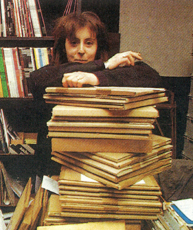 As far as I know you have released also compilation albums as well, did you consider it important to release such records?
“During Thrash’s first period (1989 – 1994), we didn’t release any compilations, only splits under the Infest Records label. The reason? Many projects were underway with Thrash Records and it wasn’t always possible to release everything at once. To promote the bands, Infest Records released a split with EXCRUCIATE and EPITAPH. This allowed them to gain exposure before the release of their full albums on Thrash Records. Infest’s first release was also a split, because after discussions with MISANTHROPE (we were planning an EP), we had the opportunity to include TORTURER, a Chilean band that MISANTHROPE had introduced us to and who had immediately impressed us.”
How was your connection with the bands? Did you get on well with them? Were they colleagues or friends?
“Apart from the French bands we already knew, we only communicated with all the other groups by letters or fax. We had no other way to contact them. They weren’t colleagues or friends. We didn’t know them until we received their first demo. What brought us together was the music and everyone contributed in their own way.”
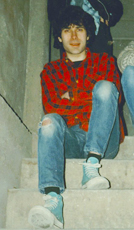 Did you pay the studio costs as the bands entered the studio to record their materials? Did you have an own, home studio, where the bands could record their albums? Did you have mixer, sound engineer etc.?
“We had no home studio, no mixing console, no sound engineer; only the desire to contribute to the promotion of these bands by producing these projects.”
How did you support your bands? Did you pay adds in Metal magazines or fanzines? How were the bands promoted at that time? Did you send the albums on tapes to fanzines and magazines? Did you always send the whole album or only an advance tape?
“Of course, we also had our network of contacts with fanzines, magazines and radio shows, both in France and abroad. It was important to do it. I didn’t remember if we paid any advertising costs. I think most of time we sent a copy of the new EP, CD or vinyl.”
 Did you send them on tours too?
“We didn’t organize any tours with the bands we produced. We had done gigs (no tour) with others bands during the Alienation fanzine period. But there were only one or two of us, it was impossible to do everything.”
Could you tell us about your daily tasks?
“Since Thrash Records operated in two ways – mail order and record production – our main task was to receive the mail, prepare orders and send them out by letter. Initially, every three weeks, we spent a day in London buying new releases and restocking certain titles. The next day, back in Le Havre, we would rush to create the new catalog and send it to all our customers. The day after that, we knew the first calls would arrive around noon from those wanting to reserve the available records. Later, due to changes in distribution, we increasingly placed orders with wholesalers who distributed several labels at higher prices, but we could no longer order directly from those labels. Our other activity involved listening to new demos, letting bands know if we were interested in collaborating and also organizing exchanges and the production of releases.”
 By which labels were your releases distributed in other continents? Did you often get letters from American / Asian etc. fans who liked your records?
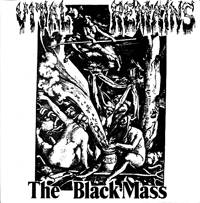
“We collaborated with other labels such as Wild Rags and Relapse for the United States, Nuclear Blast in Germany at the beginning and with Semaphore for Europe, Shigaku in England, Turbo for Germany, Austria and Switzerland, House Of Kicks for Sweden, Drowned in Spain and New Rose for France, who were our main distributors.”
Were you satisfied with the approach of the bands?
“I think they were as young as me, and like them, we were thrilled to release EPs, LPs or CDs to support all these new bands. It was incredible to get into production with a small budget and, above all, with this desire to contribute to this emerging scene! Everyone was building their own experience. I don’t remember ever having bad relationships with the bands.”
 As far as the cover of the albums, did you have a designer or an artists who drew, painted the covers? Did you also make motion covers for different records? I mean, did you submit, what kind of covers the bands have to use?
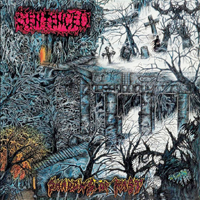
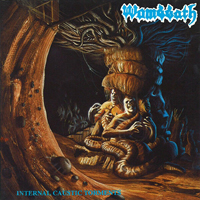
“The bands often sent us their album covers, except for WOMBBATH and TORTURER. For those two albums, the Canadian painter SV Bell created the covers specifically for them. I don’t remember how we first got in touch.”
Did you always pay royalties to the bands? Could the bands earn some money as far as the selling, merchandise etc.?
“I think not all groups made money with their first release. Their first goal was to recoup studio costs and take advantage of the promotion, record sales, playing concerts and having fun.”
 Did the bands of the label shoot videoclips at that time? Did you consider it important to shoot videoclips? What kind of importance do videoclips have? Is it a kind of promotion?
“It wasn’t the same era as today. There were no social networks. Promotion was mainly done through fanzines, flyers, magazines, exchanging audio or video cassettes and gigs. Some people, like my husband, recorded the concerts for almost 40 years (https://www.youtube.com/@PhilRDIY), but there were never any video clip because few people used that type of communication. It was really expensive and almost no way to post it.”
Were Heavy Metal programs broadcasted by the TV channels and radio stations at that time? Did the TV channels, radio stations support the Metal scene?
“In France in 1990, I don’t remember if there was Metal programs broadcasted by the TV channels and radio stations. Before we opened the shop, we hosted a radio show on one of the first free radio stations in France, in Le Havre, and it was always unpredictable because the broadcasting license wasn’t very clear yet.”
 Was it easy getting in touch with radios, TV channels, magazines etc.?
“For us, the main communication tool was the fanzines around the world. After that, we were in touch with some radios in the USA like Metal Cage with Jim Collins and in Belgium with Radio Venom for example. They were very active and a it was a good way to be promoted with their charts. We didn’t contact any television channels, because we weren’t aware of any TV programs on this topic.”
Could you tell us how many items were sold from the releases of Thrash Records? Which was the most successful record? Did the fans, the media like your releases?
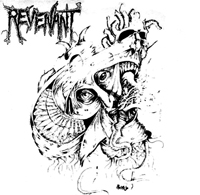
“At Thrash Records, we produced 23 releases, including two with Infest Records, one with Putrefaction Records and five on Infest Records. During this period, we produced an average of two to three pressings of 1,000 copies each, depending on the band. I think the band that sold the most was REVENANT. It was a crazy time and the releases were well-received! “Screams From The Underground” presented the story of Thrash Records written by Dima Andreyuk. It was released by Seven Inches Metal Records in 2025.”
 Which fanzines and Metal magazines do you remember from that time?
“I can talk about magazines like Rock’n Force and HardRock Rendez Vous (France), Kerrang!, Metal Forces and Thrash ‘n Burn (England), Close Up (Sweden), Mortician mag (Netherlands), Morbid Noizz (Poland) and Metal Hammer (Germany and France), as well as fanzines like Holocaust Zine (Poland), No Name (Slovenia), Radiation Deficiency (USA), Peardrop (France) and I’m only mentioning the main ones.”
In your opinion, what kind of role do the fanzines play in the underground?
“Their role was essential at that time, especially for underground music. It was the most important means of access to these type of music (Thrash, Death, Grind, Crossover). The fanzines were more numerous than today and they were present everywhere. For example, we released a fanzine before the shop during seven years and we had many contributors in many countries. This network allowed us to keep informed about the scene, the new bands, the new releases and what happened in many countries and to have exchanges between persons. It was really a good way to have the information.”
 What does underground mean to you, to be underground respectively?
“I think that for us, to be “underground” means promoting a musical culture using our own means and our own will. It’s an act of activism, not a commercial endeavor, even if we need an organization like a company, but the main objective is to choose bands we like and contribute to the promotion of this musical culture. So, Thrash is an underground label.”
What kind of relationship did Thrash Records have with the other Heavy Metal labels at this time or later on? I’m thinking of labels like Steamhammer, Mausoleum, Rave On, Roadrunner etc.?
“We weren’t in touch with Heavy Metal labels, only labels like us, at least at the beginning, as Wild Rags, Relapse, Nuclear Blast, Earache… I think the Thrash, Death, Grind scene was more underground at this period than the Heavy Metal scene.”
 Is there any band from the early days or later on that you regret not having signed or failed at the last minute, because another label made a stronger offer? Were there bands at that time that have got an offer from you, but they didn’t accept it?
“I don’t recall any specific cases, but it’s possible some groups didn’t follow up on our proposals because they found a better deal or a bigger label. I think our label is more of a springboard for bands. We were involved in their initial projects.”
Would you say that it’s easier than before to promote a band nowadays for a label with the new tools, such as internet, or is it just a totally different world and nothing can’t be compared?
“It’s difficult to compare these two periods. Before, our only sources of information were letters, fanzines, concerts, flyers, cassette exchanges and a few magazines. Communication was “unique” (no interaction) and our relationship that time was different. We waited for the mail, the publication of fanzines and the newsletters we received. Today, it seems easier, but I don’t think that’s really the case. We can touch more persons at the same time, it’s free to send information, sound, video… but as soon as you want to promote an event and you use social media, if you post a message, a few minutes later, we’re bombarded with messages, ads and information from everywhere. The difficulty is being and remaining visible… except if you are always present on social media.”
 As far as the internet, what do you think about downloading of music? Do you support it or are you against it?
“It’s another alternative to promote the music. I think we have to accept it because it’s unavoidable. Today, people who buy music do so largely to support the scene, and perhaps even more so for older generations; they want a physical medium with information on the record or CD. It’s more than just listening to tracks, especially in Metal and Hardcore.”
What do you think about the present music scene compared to the ’80s one? What did change, how much did it change, wherein did it change?
“I can see, as we used to go to many gigs that the first difference is the age of the audience, especially for the Thrash Metal scene in France. The second is that in the ’80s, there were just a few gigs. It was rare. Even today, it’s always difficult for other reasons to find a place to play, is always a problem, there are many gigs and festivals. The opportunities are of course bigger in the big towns and the way to communicate without comparison with social media.”
 In your opinion, is it easier to get a deal nowadays than 15 – 20 years ago?
“I can’t answer your question about the last 15 – 20 years, only the last 35 – 40. These days, if you want to record, you can do it at home and outsource the mastering to a professional. You can self-produce and use existing social media platforms with a global audience. There are more ways to be more professional, it’s really easier. Before, it was a real struggle. The band could only record in a studio, there was no internet, no way to send the master (for us, on DAT tape) except by mail. We had the records for Thrash Records, Infest Records and Putrefaction Records (founded by the singer and guitarist of NOMED) mastered at Diams Mastering studio in Paris before launching vinyl production.”
Val, thanks a lot for your answers, any closing words to the interview?
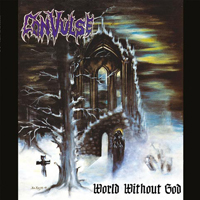
“Thank you for this interview. As you can see, music is our life. In Paris, we regularly attend many concerts, mostly small, emerging bands and we promote them (Phil R with his videos and me with photos that you can find on Facebook under Valerie Roger). After a break of around 25 years (we cared for our children), we resumed our production activities. We had been asked to do so several times, and finally, we decided to start again with a CD book accompanied by two CDs compiling all the EPs we made on Thrash. This limited edition sold out in 10 to 15 days in October 2024. Then, in April 2025, we reissued CONVULSE’s “World Without God” with the band, who were embarking on a tour of Europe and then Australia with a vinyl version (now sold out) and a digipak CD with a live bonus and a 24 pages booklet (still available). At the end of 2025, we released an EP with the French old school Death Metal band SKELETHAL that was formed in 2012 (still available). Early June, we plan to release a new album from PENDRAK, a French Grindcore band (formed in 2015), as well as a remastered vinyl reissue of S.U.P.’s CD “Hegemony”, originally released on CD, which we are releasing as a double gatefold LP on marbled grey vinyl. S.U.P. is a french Death Metal / Doom Death band (formed in 1990 as SUPURATION). Stay tuned! The story of Thrash Records continues!”
www.facebook.com/thrashrecordslehavre
Intro: Frank
Interview: Dávid László